

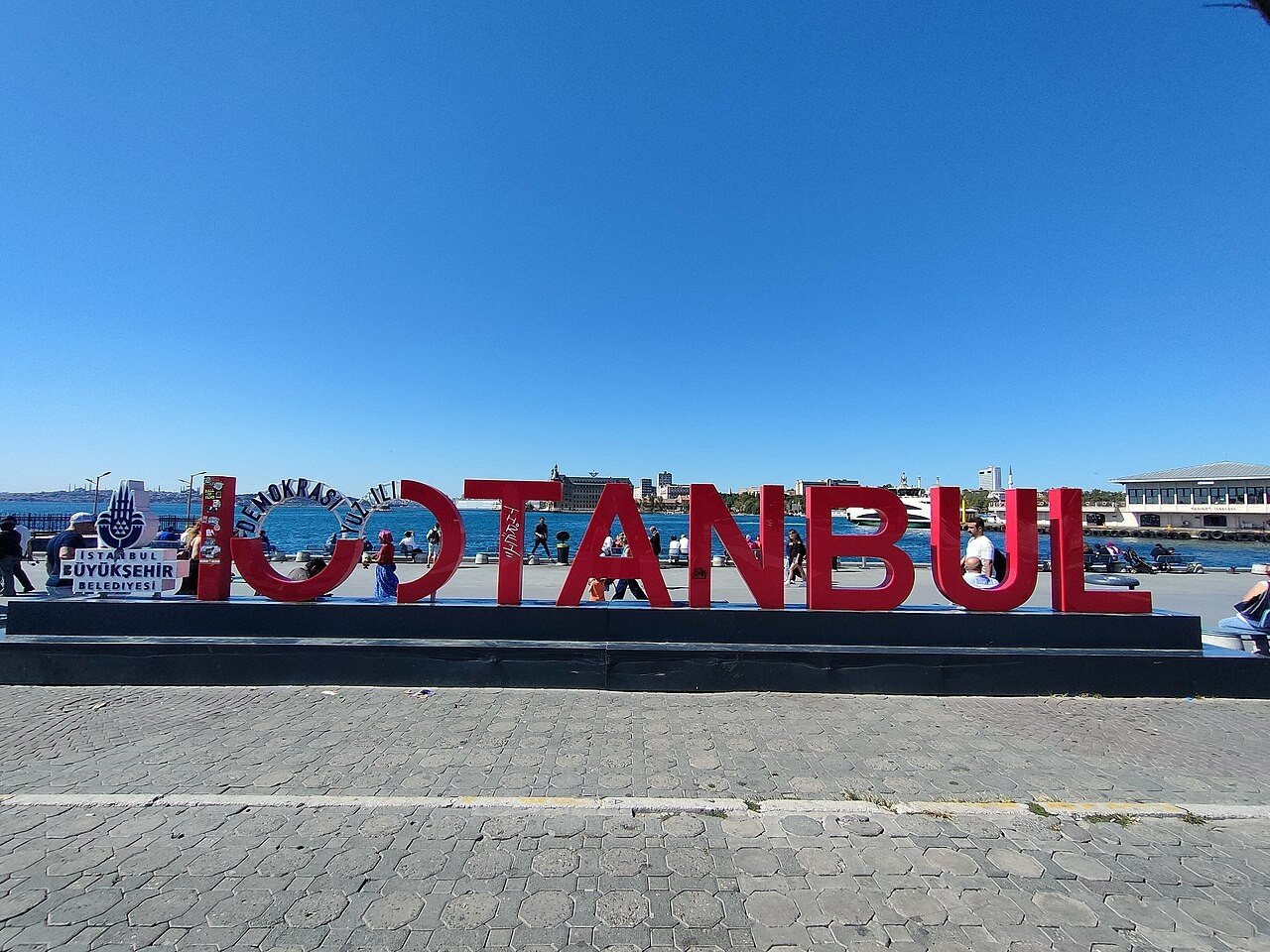
Turkish is the language of Istanbul’s bazaars, Cappadocia’s cave hotels and the menus of every lokanta in Turkey — and it is also one of the easiest languages to mistranslate from a photo. A single missing dot over an “i” can change a word completely, and Turkish words can grow very long as suffixes pile up. If you have a photo of a Turkish street sign, menu, label or document, here is how to translate Turkish text in images to English quickly and accurately.
How to translate Turkish text in images to English in seconds
You do not need to type anything. An AI image translator reads the Turkish text straight from your photo and gives you the English translation:
- Open the Image Translator tool on this site.
- Upload your photo, or take a picture of the Turkish text with your phone.
- Choose Turkish as the source language and English as the target language.
- Tap translate. The English text appears in seconds, and you can copy it or save it.
That is all it takes for most photos. The rest of this guide explains how to get the best results, what to watch out for in Turkish, and how to handle the trickiest cases — menus, street signs, handwritten notes and long official words.
Watch out for the two kinds of “i”
Turkish has two different letters that English speakers often confuse: dotted İ/i and dotless I/ı. They are completely different sounds and different letters, and swapping them changes the meaning:
- sıcak means “hot” — sicak is not a word at all.
- kız means “girl” — kiz is not a word either.
- ılık means “lukewarm” — ilik means “bone marrow”.
When you photograph Turkish text, make sure the dots are clearly visible in the image. If a dot is cut off or blurred, the translator may read the wrong letter. A clear, straight photo taken in good light solves most of these errors before they happen.
The letters that trip up translation
Turkish uses the Latin alphabet, which makes it look familiar — but six letters do not exist in English, and each one changes the sound and the meaning:
- ç — pronounced like “ch” in “chair”. Çay means tea, Turkey’s national drink.
- ş — pronounced like “sh”. Şeker means sugar.
- ğ — the “soft g”. It stretches the vowel before it and is almost silent. Dağ means mountain.
- ö — like the “u” in the German “schön”. Göl means lake.
- ü — like the French “u”. Gül means rose.
- ı — the dotless i, a short sound like the “a” in “sofa”. Işık means light.
A good image translator recognises all of these automatically. But if you are checking a result by hand, remember that c in Turkish is pronounced like the English “j” — so cami is a mosque, not a camera — and e is always pronounced, never silent.
Why Turkish words look so long
Turkish builds meaning by adding suffixes to a word, so one long word can say what English needs a whole phrase for. Evlerinizden means “from your houses” — ev (house) + ler (plural) + iniz (your) + den (from). Yapabileceklerimiz means “the things we will be able to do”.
This matters for translation because a long word in a photo is easy to misread if part of it is cut off or blurry. Always photograph the whole word, and if the translation looks strange, check that the full word was captured — a missing suffix can flip the meaning, for example turning “I can do it” into “I cannot do it” when the negative suffix -me is missed.
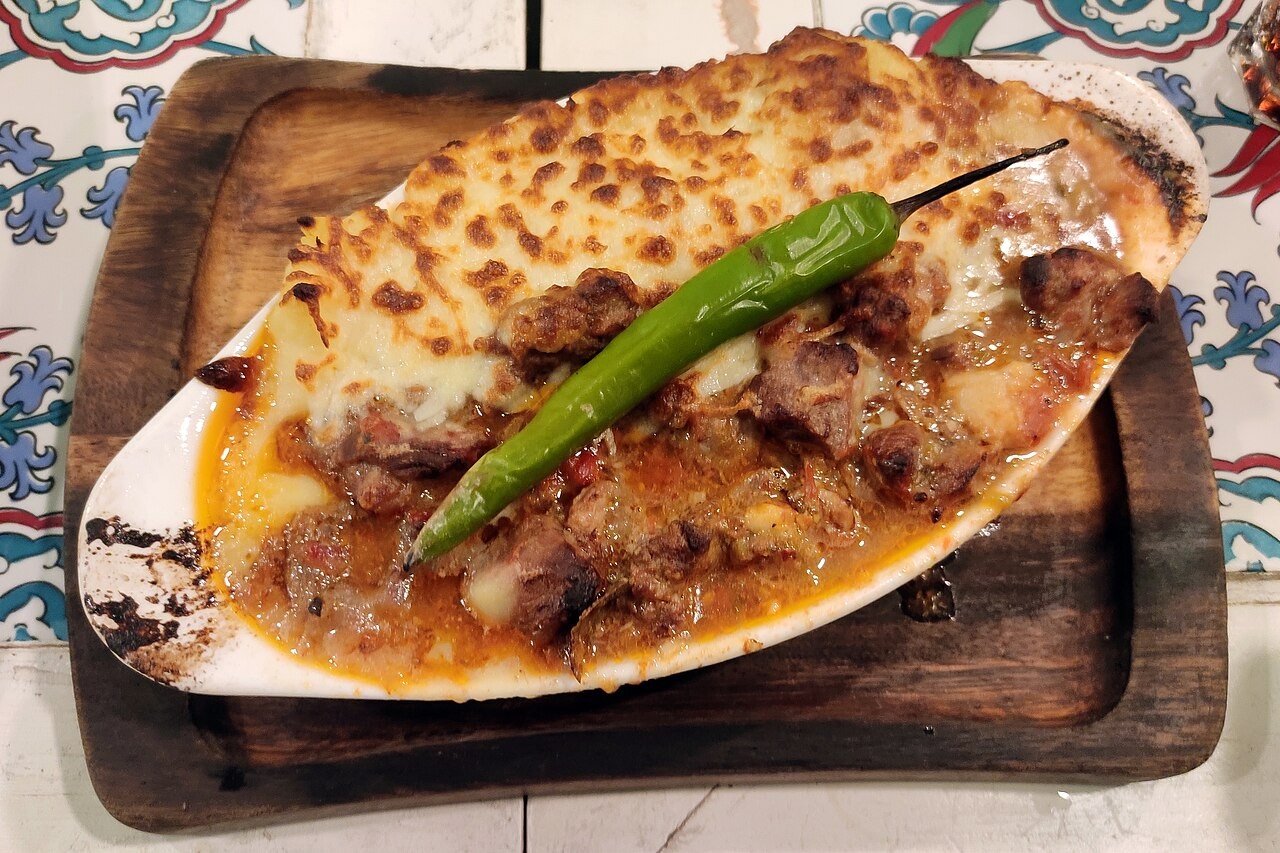
Translating a Turkish menu
Turkish menus are full of words that do not translate neatly, because they name dishes rather than ingredients. These are the ones you will meet most often:
| Turkish | English | What it is |
|---|---|---|
| Mercimek çorbası | Lentil soup | The classic starter in almost every lokanta |
| Adana kebap | Adana kebab | Spicy minced meat grilled on a skewer |
| Döner | Doner kebab | Meat cooked on a vertical spit, sliced thin |
| Lahmacun | Turkish pizza | Thin flatbread topped with minced meat |
| Pide | Pide | Boat-shaped flatbread with cheese or meat |
| Baklava | Baklava | Layers of pastry with nuts and syrup |
| Ayran | Ayran | A salty yoghurt drink, served with kebabs |
| Çay | Tea | Small tulip-shaped glasses, served everywhere |
A menu photo often has small print and a busy background, so take the photo straight on and in good light. If the dish name still translates oddly, translate the description underneath it too — the ingredients usually make the dish clear.
Translating Turkish street signs while travelling
Street signs in Turkey are short, direct and very useful once you can read them:
- Dur — Stop
- Giriş — Entrance
- Çıkış — Exit
- Yaya geçidi — Pedestrian crossing
- Tek yön — One way
- Park yapılmaz — No parking
- Dikkat — Attention / Caution
- Hastane — Hospital
- Tuvalet — Toilet
- Açık — Open
- Kapalı — Closed
Many signs use abbreviations or symbols, so photograph the whole sign rather than zooming in on one word. A sign that reads “Giriş yasaktır” means “entry forbidden” — but if you only capture “Giriş”, the translation will say “entrance”, which means the opposite. Context is everything with signs.
Translating Turkish labels and product packaging
Turkish product labels follow a familiar pattern once you know the key words: içindekiler means ingredients, son kullanma tarihi means expiry date, net ağırlık means net weight, and kullanım talimatı means instructions for use. Medicine labels add doz (dose) and yan etkiler (side effects) — translate those carefully and, for medicines, double-check the dose with a pharmacist rather than relying on a photo translation alone.
Packaging is often curved or glossy, which can confuse image recognition. Flatten the label if you can, wipe away glare, and take the photo from directly above the text rather than at an angle.
Translating handwritten Turkish notes
Handwritten Turkish is harder than printed text, because the dots over i and the tails under ç and ş are often written quickly or joined to the next letter. A handwritten note from a friend, a hotel receptionist or a market stall owner may also use informal spellings — “naber?” for “what’s up?” instead of the formal “ne haber?”.
For the best result, photograph handwriting in bright, even light, keep the page flat, and crop tightly around the text. If one word comes back wrong, try photographing just that line on its own — a closer crop often fixes it.
Common mistakes to avoid
- Photographing at an angle. Perspective distortion stretches letters and breaks recognition. Shoot straight on.
- Cutting off the ends of words. Turkish suffixes carry the meaning. A cut-off word is a different word.
- Ignoring the dots. Dotted and dotless i are different letters. Blurry dots cause wrong translations.
- Trusting one word out of context. “Açık” can mean open, light-coloured or clear, depending on the sentence. Translate the whole phrase.
- Forgetting the capital I problem. In Turkish, the capital of dotted i is İ, not I. A sign written in all capitals — “ISIK” — may actually be “IŞIK” (light). A translator that knows Turkish handles this, but a generic tool may not.
Frequently asked questions
Can I translate Turkish text in a photo to English for free?
Yes. The Image Translator tool on this site translates Turkish text in images to English for free — just upload the photo and choose Turkish to English.
Does Turkish use the same alphabet as English?
Mostly. Turkish uses the Latin alphabet with six extra letters — ç, ğ, ı, ö, ş and ü — and two kinds of i. It is written left to right, just like English.
Why is my Turkish translation wrong?
The most common causes are a blurry photo, a cut-off word, or a missing dot over an i. Retake the photo straight on, in good light, with the whole word visible, and try again.
Can an image translator handle handwritten Turkish?
Yes, if the handwriting is clear. Print-style handwriting works best. Very fast cursive with joined letters is harder, so photograph one line at a time.
What is the difference between Turkish and Azerbaijani?
They are closely related Turkic languages and share many words, but they are not the same language. Make sure you select Turkish, not Azerbaijani, as the source language, or the translation may use the wrong words.
Read next
- How to Translate French Text in Images to English
- How to Translate German Text in Images to English
- How to Translate Portuguese Text in Images to English
- How to Translate Spanish Text in Images to English
- How to Translate Korean Text in Images to English
- How to Translate Text in a Screenshot to English
- How to Translate a Scanned Document to English
- How to Translate a Menu in a Photo to English
- How to Translate Street Signs While Travelling
